
Encontro Nacional da SBFoton 2026
August 12th – 14th, 2026
Campinas, SP – Brazil
Diamond Sponsors


Gold Sponsor

Silver Sponsors


Supporter

Welcome to the first edition of the SBFoton National Meeting 2026 (ENSBFoton 2026). This event focuses on a broadband approach to optics and photonics-related technologies, including optical communications, optical fibers and applications, optical instruments and metrology, lasers, integrated optics and optoelectronics, sensing, imaging, illumination, optical quantum technologies, agriphotonics, and biophotonics.
The ENSBFoton 2026 program includes the Photonics Industry and Entrepreneurship Workshop, mini-courses, technical exhibitions, and oral and poster sessions for peer-reviewed scientific contributions.
Accepted works will be published in a Special Issue of Revista da SBFoton (ISSN-2966-0726).

Submissions
June 15th, 2026
Notification of acceptance to authors
June 29nd, 2026
Registration
July 07th to August 14th, 2026
Event
August 12th to 14th, 2026
| SBFoton affiliate | ||
| Until July 31st | From August 1st | |
| Professional | R$ 700.00 | R$ 800.00 |
| Graduate student | R$ 500.00 | R$ 600.00 |
| Undergraduate student | R$ 300.00 | R$ 400.00 |
| IEEE Photonics Society/Optica/SPIE affiliate | ||
| Until July 31st | From August 1st | |
| Professional | R$ 800.00 | R$ 900.00 |
| Graduate student | R$ 550.00 | R$ 650.00 |
| Undergraduate student | R$ 350.00 | R$ 450.00 |
| Non-member | ||
| Until July 31st | From August 1st | |
| Professional | R$ 900.00 | R$ 1,000.00 |
| Graduate student | R$ 600.00 | R$ 700.00 |
| Undergraduate student | R$ 400.00 | R$ 500.00 |
| Wednesday, August 12nd | |
| 12:00 | Registration |
| 14:00 – 14:15 | Opening session |
| 14:15 – 15:00 | Plenary talk Anderson Gomes (UFPE) |
| 15:00 – 16:00 | Photonics Industry and Entrepreneurship Workshop |
| 16:00 – 16:30 | Coffee Break |
| 16:30 – 18:00 | Photonics Industry and Entrepreneurship Workshop |
| 18:30 | Welcome reception at Hotel CPV UNICAMP |
| Poster presentations 1 – Agriphotonics, Biophotonics, and Lasers | |
| Thursday, August 13rd | |
| 08:00 – 09:00 | Mini-course 1 – Quantum information |
| 09:00 – 09:30 | Invited talk 1 Cristiano Cordeiro (UNICAMP) |
| 09:30 – 10:30 | Mini-course 1 – Quantum information |
| 10:30 – 11:00 | Coffee break |
| 11:00 – 13:00 | Mini-course 1 – Quantum information |
| 12:00 – 13:30 | Lunch |
| 13:30 – 14:00 | Diamond Sponsor – Keysight Technologies Testing quantum computing and quantum communication |
| 14:00 – 16:30 | Oral Presentations 1 – Agriphotonics, Biophotonics, Lasers, Sensing, imaging, and illumination |
| 16:30 – 18:00 | Coffee Break |
| Poster Presentations 2 – Optical fibers and applications, Optical instrumentation and metrology, and Sensing, imaging, and illumination | |
| 18:00 – 19:00 | SBFoton Assembly |
| 20:00 – 22:00 | Conference Dinner (Not included in the registration) |
| Friday, August 14th | |
| 08:00 – 09:00 | Mini-course 2 – Optical networks and cloud computing |
| 09:00 – 09:30 | Invited talk 2 Antonio José Roque (CNPEM) |
| 09:30 – 10:30 | Mini-course 2 – Optical networks and cloud computing |
| 10:30 – 11:00 | Coffee break |
| 11:00 – 13:00 | Mini-course 2 – Optical networks and cloud computing |
| 12:00 – 13:30 | Lunch |
| 13:30 – 14:00 | Diamond Sponsor – Anritsu |
| 14:00 – 16:30 | Oral Presentations 2 – Optical fibers and applications, Optical communications, Optical instrumentation and metrology, Integrated optics and optoelectronics, and Optical quantum technologies |
| 16:30 – 18:00 | Coffee Break |
| Poster Presentations 3 – Optical communications, Integrated optics and optoelectronics, and Optical quantum technologies | |
| 18:00 – 18:30 | Student prize announcement and closing ceremony |
Presentation Instructions
The duration of a presentation slot is 13 minutes. You will have 10 minutes for the presentation itself and 3 minutes for questions from the audience.
A LCD projector & computer (Windows, MS Powerpoint & Adobe Acrobat Reader) will be available in the auditorium.
PLEASE NOTE THAT YOU MUST BRING A MEMORY STICK CONTAINING YOUR PRESENTATION FILE.
Files can be uploaded to the local PCs in the lecture rooms during the coffee breaks or at lunch. You CANNOT use your own computer.
To avoid software compatibility problems (MS Powerpoint), speakers are advised to EMBED ALL FONTS in your Powerpoint file AND bring a backup PDF-version of your presentation.
Speakers should arrive in their session room 15 minutes BEFORE the start of your session to report to the session chair.
Students attending the Student Paper Competition MUST be the speaker of their presentations.
Selection process
The recommended poster size is A0 (841×1189 mm).
Presenters are requested to print and bring their posters along with them as there will be no poster printing service provided by the conference organizers.
Authors must place their posters before the Poster Session, preferably in the morning before the coffee break or during lunchtime.
At least one author must stand by the poster during the poster session and be prepared to answer attendees’ questions.
Students attending the Student Paper Competition MUST present their posters.
Authors must collect their posters after the Poster Session.
Best Poster Presentations
Best Oral Presentations
ENSBFoton 2026 Student Paper Competition is organized by SBFoton and financially supported by SPIE.
Our goals
Eligibility
To register for the competition, each participant must attend ENSBFoton 2026 as an undergraduate or a graduate student when he/she submitted the paper, must be the first author and must present the paper at the conference.
Registration
The submission to the Student Paper Competition should provide the paper conference number/code, in accordance with the SBFoton Conference Technical Program, the student’s name and the university where the research was carried out by the competitor as a graduate student when the work was done.
Selection process
The Student Paper Competition is a juried track for ENSBFoton 2026. Juried content will be peer-reviewed by experts who will evaluate the work based on its overall quality, originality, and relevance to the SBFoton community, as perceived by them for the oral presentation during the designated Technical Session. The competitor’s performance will be assessed by the following criteria:
For the final score computation, the score received from peer reviewers during the review process, prior to the conference, will also be taken into account.
Awards
The competition results will take place during the Closing Ceremony. The top three oral and top three poster presentations will receive USD 250.00 from the competition sponsor (SPIE).
Manuscript preparation
EDAS submission
Acceptance will be communicated by June 22, and final versions of accepted papers may be uploaded up to July 13.
Plenary Speakers
Aug 12th
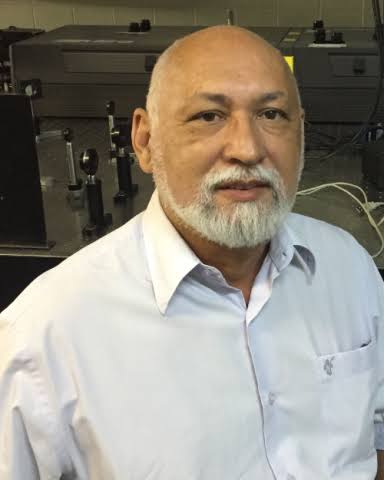
Prof. Dr. Anderson Stevens Leonidas Gomes (UFPE)
Entre experimentos e estratégias: uma jornada entre a fotônica e a gestão científica
A fotônica tem revelado novos caminhos para compreender e intervir em sistemas complexos, da coerência da luz ao comportamento de materiais em nanoescala. Nesta apresentação, discutirei resultados recentes (2025/2026) de pesquisa com novas aplicações multidisciplinares de random lasers e random fiber lasers, nanomateriais e no uso de lasers de femtossegundos em aplicações biomédicas, com foco em abordagens inovadoras para o tratamento de câncer. As pesquisas foram realizadas com colaboração nacional e internacional. A partir dessa trajetória científica, ampliarei o olhar para o campo da gestão e inteligência estratégica, compartilhando reflexões sobre como o CGEE – Centro de Gestão e Estudo Estratégico atua na formulação de políticas baseadas em evidências, na prospecção tecnológica e na articulação entre ciência e sociedade. Entre experimentos e estratégias, busco mostrar como o mesmo espírito exploratório que move a física pode iluminar também os caminhos da gestão do conhecimento e da inovação científica no Brasil.
Físico (UFPE-1978), Mestre em Física (UFPE, 1982), PhD em Física (Imperial College, Londres, 1986). Pós-doutorado na Brown University (1992/3). Professor no Departamento de Física da UFPE desde 1988. É co-autor de mais de 220 artigos científicos (Fator H: 27) e supervisionou 29 dissertações de mestrado e 16 teses de doutorado. Distinções: Fellow da Optical Society of America, onde foi Presidente do Conselho Internacional (2011-2012). Comendador – Ordem Nacional do Mérito Científico. Membro da Sociedade Brasileira de Física, Sociedade Brasileira para o Progresso da Ciência e SPIE. Foi membro do CA-CNPq, do Conselho Superior da FACEPE e coordenou a área de Física e Astronomia da CAPES de 2008 a 2010. Atua como árbitro de várias revistas internacionais em sua área de conhecimento (Optics Letters, Optics Express, Physical Review, J. of Biomedical Optics, Electronics Letters, etc). É Editor Associado da revista Advances in Optics and Photonics, da Optical Society of America. Foi Secretário de Estado de Ciência, Tecnologia e Meio Ambiente (2010) e Secretário de Educação (2011/12) em Pernambuco. É pesquisador 1A do CNPq.
Invited Speakers

Aug 13th
Prof. Dr. Cristiano Monteiro de Barros Cordeiro (UNICAMP)
Specialty Optical Fibers: Exploring Novel Geometries and Materials for Sensing Applications
Standard optical fibers have revolutionized global communications and have become vital to modern communication infrastructure, with more than 6 billion kilometers of fiber manufactured worldwide. Advanced optical fibers exploit internal microstructures and novel materials to expand waveguide functionality and enable new applications. Our work focuses on developing optical-fiber sensing platforms, including microstructured and hollow-core fibers made from silica and polymers, as well as specialty fibers based on biodegradable materials. These platforms are investigated for refractive-index, curvature, temperature, and strain sensing, alongside biodegradable photonic devices with potential future applications in sustainable biomedical and environmental monitoring. By combining advanced fiber architectures, functional materials, and innovative fabrication approaches, this research seeks to establish versatile sensing platforms with improved performance, adaptability, and reduced environmental impact.
Graduação (1996) e mestrado (1998) em Física pela Pontifícia Universidade Católica do Rio de Janeiro (PUC-Rio), doutorado (2003) pela Universidade Estadual de Campinas (UNICAMP). Estágios de pós-doutorado pela Universidade de Bath, na Inglaterra (2005) e UNICAMP (2008). Professor do Instituto de Física da UNICAMP desde 2008. Sua área de pesquisa inclui os seguintes temas: sensores ópticos, photonic crystal fiber (fibras de cristal fotônico), fibras ópticas especiais com novas funcionalidades, dispositivos a fibra óptica, proposta/design e fabricação de fibras especiais de sílica e polímero, uso de manufatura aditiva para produção de amostras com interesse em óptica e fotônica, ensino de óptica e novos experimentos didáticos.
Aug 14th
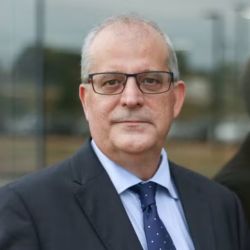
Prof. Dr. Antonio José Roque
To be announced
Standard optical fibers have revolutionized global communications and have become vital to modern communication infrastructure, with more than 6 billion kilometers of fiber manufactured worldwide. Advanced optical fibers exploit internal microstructures and novel materials to expand waveguide functionality and enable new applications. Our work focuses on developing optical-fiber sensing platforms, including microstructured and hollow-core fibers made from silica and polymers, as well as specialty fibers based on biodegradable materials. These platforms are investigated for refractive-index, curvature, temperature, and strain sensing, alongside biodegradable photonic devices with potential future applications in sustainable biomedical and environmental monitoring. By combining advanced fiber architectures, functional materials, and innovative fabrication approaches, this research seeks to establish versatile sensing platforms with improved performance, adaptability, and reduced environmental impact.
Graduação (1996) e mestrado (1998) em Física pela Pontifícia Universidade Católica do Rio de Janeiro (PUC-Rio), doutorado (2003) pela Universidade Estadual de Campinas (UNICAMP). Estágios de pós-doutorado pela Universidade de Bath, na Inglaterra (2005) e UNICAMP (2008). Professor do Instituto de Física da UNICAMP desde 2008. Sua área de pesquisa inclui os seguintes temas: sensores ópticos, photonic crystal fiber (fibras de cristal fotônico), fibras ópticas especiais com novas funcionalidades, dispositivos a fibra óptica, proposta/design e fabricação de fibras especiais de sílica e polímero, uso de manufatura aditiva para produção de amostras com interesse em óptica e fotônica, ensino de óptica e novos experimentos didáticos.
Aug 12th - Quantum Information
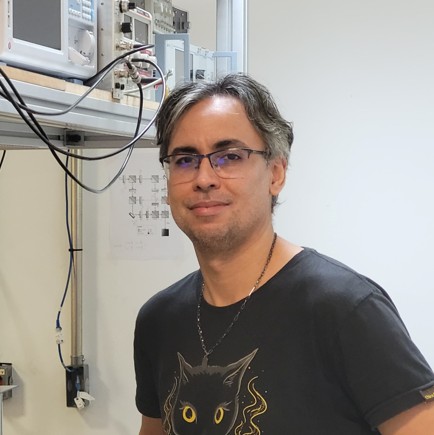
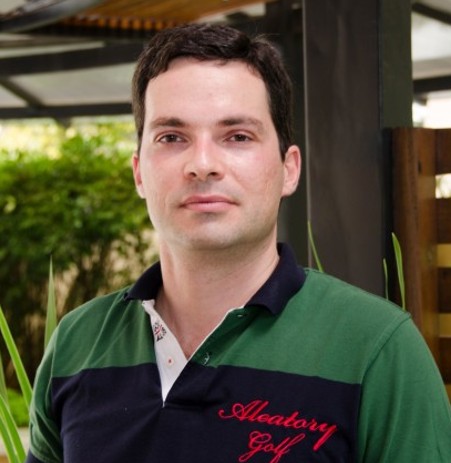
Prof. Dr. Breno Marques Gonçalves Teixeira
Professor at the Universidade Federal do ABC, where he works on the experimental implementation of quantum information protocols in single photons in free space and on photonic chips.
A informação quântica investiga o aprimoramento de processos informacionais por meio da exploração de propriedades quânticas de sistemas físicos. Diferentes propostas de algoritmos quânticos fundamentam-se em características não clássicas distintas. Este minicurso apresenta uma revisão das propriedades quânticas de sistemas físicos sob a perspectiva da teoria da informação, demonstrando sua aplicação em protocolos centrados nestes fenômenos. Além disso, abordaremos a utilização de estados da luz como plataforma física para a implementação experimental de protocolos de informação quântica.
Inicialmente, serão discutidos os princípios fundamentais da mecânica quântica relevantes para o processamento e transmissão de informação, incluindo superposição, interferência e emaranhamento quântico. Tais propriedades permitem o desenvolvimento de estratégias computacionais e comunicacionais que não possuem equivalentes clássicos diretos, abrindo caminho para ganhos de eficiência em determinadas tarefas de processamento de dados, criptografia e simulação de sistemas físicos complexos.
Em seguida, serão apresentados exemplos de protocolos de informação quântica que exploram esses recursos, como distribuição quântica de chaves, teleportação quântica e algoritmos voltados à aceleração computacional. A análise desses protocolos será conduzida de forma conceitual e operacional, enfatizando a relação entre as propriedades físicas dos sistemas quânticos e as vantagens informacionais obtidas a partir delas.
Por fim, o minicurso discutirá aspectos experimentais associados à implementação de sistemas quânticos ópticos, destacando o papel da fotônica quântica como uma das principais plataformas para aplicações em informação quântica. Serão introduzidos conceitos relacionados à geração, manipulação e detecção de estados quânticos da luz, bem como os desafios tecnológicos envolvidos na construção de dispositivos e arquiteturas voltados ao processamento quântico de informação.
Aug 13th - Optical networks and cloud computing
Prof. Dr. Gustavo Sousa Pavani
Professor at the Universidade Federal do ABC, working mainly on the following topics: ant colony optimization (ACO) and multi-agent systems (MAS), routing algorithms in optical path-switched networks and optical packets, GMPLS control plane, and optical network support for grid architectures.
As redes ópticas desempenham um papel essencial na infraestrutura moderna de comunicação, permitindo a transmissão de grandes volumes de dados com alta velocidade, baixa latência e maior confiabilidade. Utilizando fibras ópticas como meio de transmissão, essas redes são fundamentais para suportar aplicações que exigem desempenho elevado, como streaming, inteligência artificial, internet das coisas e serviços em tempo real. O avanço das tecnologias ópticas tem impulsionado a expansão da conectividade global e a evolução das redes de próxima geração.
A computação em nuvem, por sua vez, revolucionou a forma como empresas e usuários acessam recursos computacionais, oferecendo serviços sob demanda de armazenamento, processamento e aplicações pela internet. Modelos como IaaS, PaaS e SaaS permitem maior flexibilidade, escalabilidade e redução de custos operacionais. A integração entre redes ópticas e ambientes em nuvem é indispensável para garantir eficiência no transporte de dados entre data centers, usuários e aplicações distribuídas.
Este minicurso tem como objetivo apresentar os fundamentos das redes ópticas e da computação em nuvem, explorando conceitos, arquiteturas, tecnologias e aplicações práticas. Serão abordados temas como transmissão óptica, multiplexação, virtualização, serviços em nuvem e desafios relacionados à segurança e desempenho. Ao final, os participantes terão uma visão integrada dessas tecnologias e sua importância para a transformação digital e a infraestrutura das comunicações modernas.
Se você é aluno ou pesquisador e quer entender como levar a ciência do laboratório para o mercado, o Workshop SBFoton (12 de Agosto, das 15h às 18h) é o seu lugar. Em apenas 3 horas, você passará por uma verdadeira imersão prática: conhecerá as bases do empreendedorismo na indústria de fotônica, aprenderá a modelar negócios com a metodologia Business Canvas e construirá, em grupo, soluções para problemas reais da área.
Tudo isso com mentoria ativa e uma sessão final de apresentações para validar suas ideias — além daquele indispensável coffee break para networking.
O que te espera nessa jornada de 3 horas
15:00 – 15:30 | Panorama da indústria de fotônica e bases do empreendedorismo.
15:30 – 16:00 | Treinamento prático e interativo de Business Canvas.
16:00 – 16:30 | Coffee Break & Networking.
16:30 – 17:30 | Mão na massa! Resolução de problemas reais e construção guiada de Canvas em grupo.
17:30 – 18:00 | Apresentação dos projetos e feedback.
Saia da teoria, aprenda a estruturar modelos de negócios inovadores e acelere seu perfil profissional.
Vagas limitadas!
Conference Venue
Institute of Geosciences, UNICAMP
Rua Carlos Gomes 250, Cidade Universitária Zeferino Vaz – Barão Geraldo, Campinas – SP, 13083-855.
Main Highways
Airports
Campinas is accessible by flights arriving at the Campinas (Viracopos) International Airport, Guarulhos (Cumbica) International Airport, and São Paulo Congonhas Airport. Shuttle buses are available from the airports to Campinas Bus Terminal.
Brazil offers Visa Exemption to citizens of several countries based on reciprocity agreements. Check with your travel agent or Foreign Office about your status.
The Brazilian Foreign Office maintains a listing of Visa situations at this link
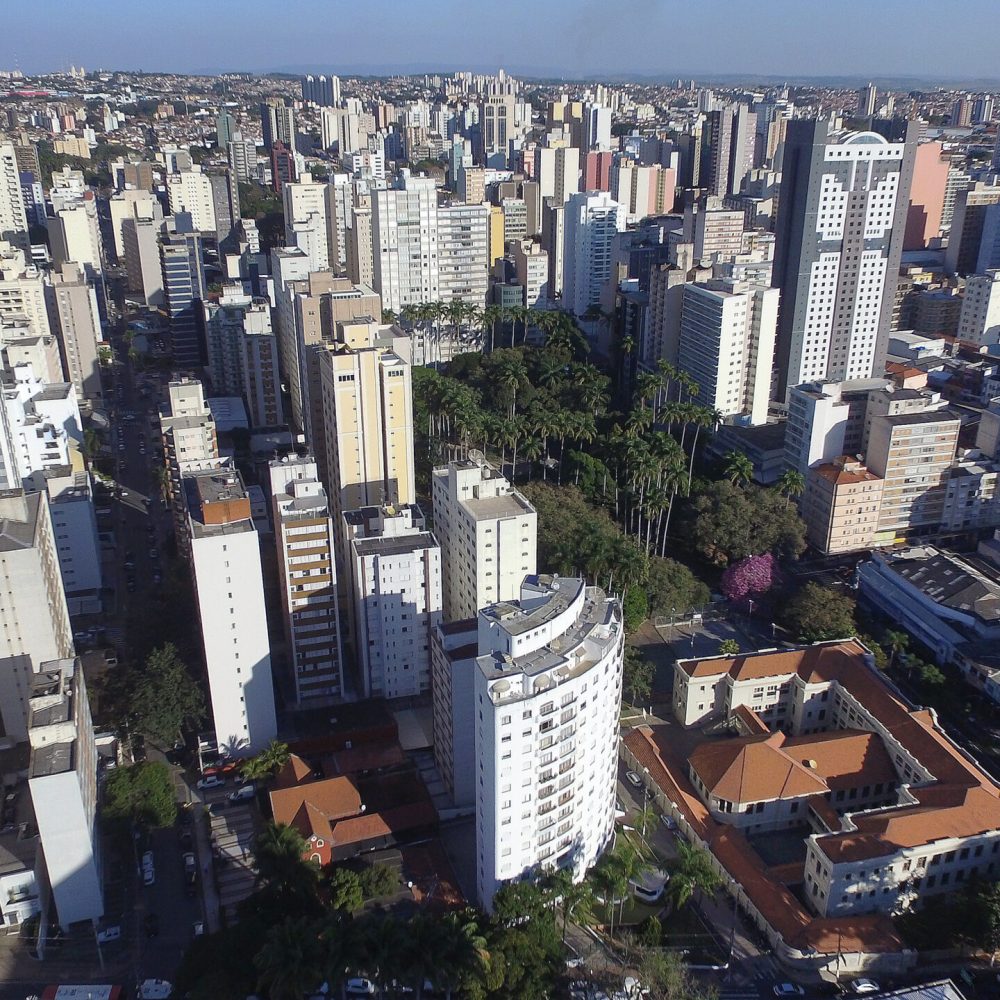
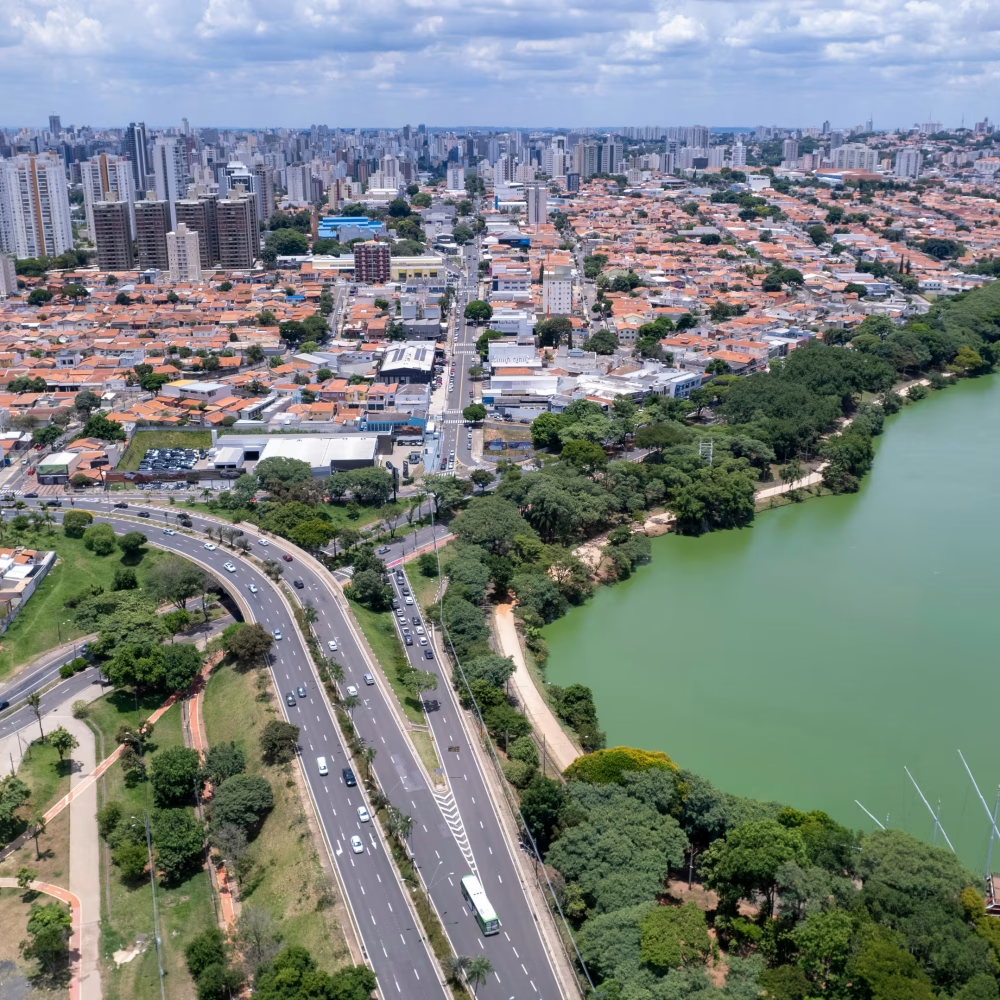
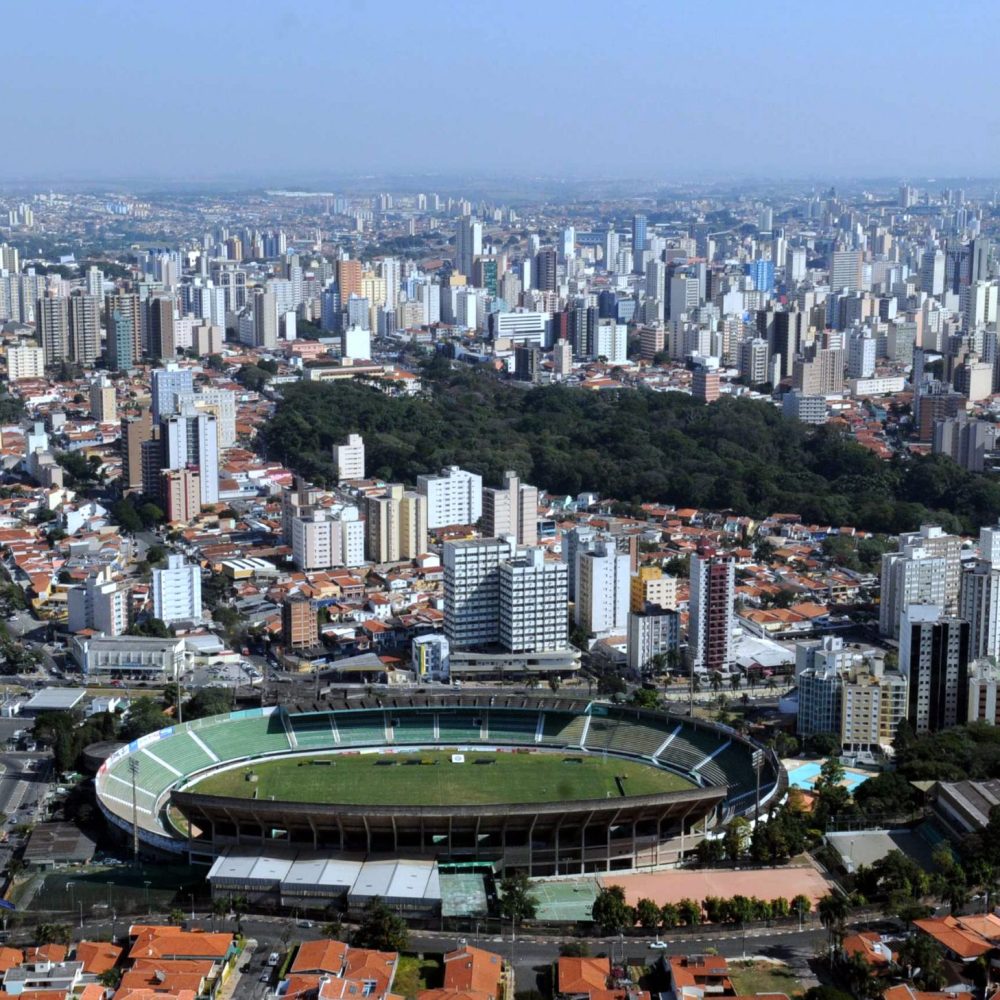
Campinas, situated at the heart of the state of São Paulo, the most populous, affluent, and industrialized region in the country, is conveniently positioned just one hour away from the capital. UNICAMP is situated in Barão Geraldo, a district within Campinas.
Distinguished as a metropolitan hub, Campinas boasts exceptional logistics, featuring modern highways, Viracopos Airport, a railway network linked to the port of Santos, and the Central Bus Station, which offers full accessibility and connections to all regions of Brazil.
Widely acknowledged as the Brazilian capital of science, technology, and innovation, Campinas hosts prominent national R&D centers, alongside Unicamp. These include the National Center for Research in Energy and Materials – CNPEM, Brazilian Agricultural Research Corporation – Embrapa, and the Research Center and Development in Telecommunications – CPqD.
The city offers a wealth of historical, technological, and cultural attractions worthy of exploration. Key highlights encompass Lagoa do Taquaral, a renowned leisure spot, Pedreira do Chapadão, Bosque dos Jequitibás, home to the city’s zoo, and an Ecological Park. Additionally, Campinas boasts two large football stadiums, hosting matches for the venerable clubs Guarani and Ponte Preta.
Click here for more information about the city’s tourist attractions.
Unibarão Hotel
R. Antônio Galvão de O. Barros, 101
Barão Geraldo - Campinas, SP
CEP 13084-275
Casa do Professor Visitante
CPV Funcamp
Avenida Érico Veríssimo, 1251
Cidade Universitária, Campinas - SP, 13083-851
Matiz Barão Geraldo Express Hotel
Av. Albino José Barbosa de Oliveira, 1700
Barão Geraldo, Campinas - SP, 13083-851
The meeting schedule will allow the companies to promote their products and interact with participants. Their logos will be displayed in all promotional materials, such as web pages, participant kits, banners, and emails. Sponsor exhibitions will be held, providing opportunities for business development, client networking, showcasing new products and technologies, recruiting human resources, and promoting brands to a highly qualified audience from Brazil and abroad. It will be an innovative forum for dialogue and interaction with various actors from the productive sector, where Science, Technology, and Innovation are part of this rapidly growing field.
For sponsorship inquiries:
Mrs. Simone Telles
Whatsapp: +55 19 99795 4774
Email: sbfoton@sbfoton.org.br
We look forward to your esteemed participation!